




Shea butter: use and benefits
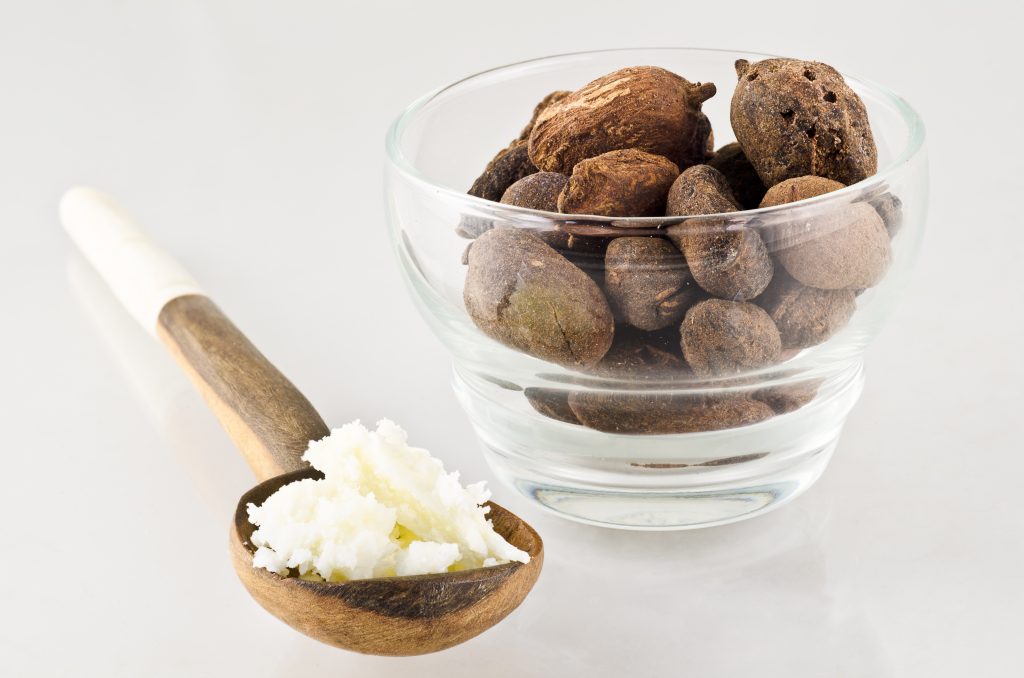
The wild tree Paradoxa calf, which grows in the African savanna, produces fruit rich in nutrients, such as: proteins, fatty acids, fiber, carbohydrates, vitamins, tocopherols, flavonoids, tannins, phytosterols and saponin, due to which they have exceptional healing properties.
The extracts of these fruits are used in the food, cosmetics and pharmaceutical industry, and the waste obtained from the processing of these nuts are reused for both obtaining biofuel and in the construction industry.
Locals used shea nuts:
- as fat for cooking;
- in the manufacture of traditional cosmetics;
- for the treatment of the sprain accompanied by other medicinal plants;
- for the hydration of the skin of the newborn but also for removing the umbilical cord;
- applied directly to the skin for dry skin care, especially in the cold season;
- lubrication of mobile parts (hinges, bicycles, etc.);
- Traditional oil lamp or traditional candle.
The residues obtained after the preparation of shea butter are used for waterproofing or as an accelerant for igniting the fire.
The use of shea butter
Shea butter It is an extracted fat either by solvents or by cold pressing, from Sea nuts, which has been used since ancient times. Thus In ancient Egypt shea nuts were used due to anti -inflammatory and emollient properties with which they treated rheumatism problems, nasal congestion, leprosy, sprains and small skin wounds.
Also Shea butter was used for body massage and skin care, for the purpose of protecting sensitive skin and irritated skin, as well as for protecting the skin against the infection, but it was applied directly to the skin as insectifugal.
Although it is possible to change the composition and the melting profile by fractionation or hydrogenation techniques used in the processing of shea butter, this natural variation has many implications regarding the range for shea butter globally.
So in the day The shea's walnut extract is one of the most appreciated of the cosmetic butter, being used in various cosmetics, such as balms, moisturizing creams, solar lotions, soaps and hair care products.
In the pharmaceutical industry it is used for Its anti -arthritic properties, hypocolesterolemic and anti -inflammatory, and in the food industry it is used as a raw material for cooking, but also as a substitute for cocoa butter, used in confectioners and chocolate preparation.
Also, Shea butter It is also noted for the unpaveible content of the whole butter, which is considerably higher, than in most other butter and vegetable oils.
Industrial use of shea butter (also called Karit butterÉ):
- as a special edible fat;
- stabilizer for various nutritional supplements;
- in the pharmaceutical industry for its therapeutic properties;
- as cosmetic ingredients in various body maintenance products (lotions, balms, creams, shaving creams, shampoos, soaps, etc.);
- In various industries from the making of candles to its usefulness as lubricants.
The benefits and actions of shea butter
The dry shea nuts in the sun, peeled and then dehydrated prevent any fungal infection. The properly processed shea butter may have beneficial effects on the body because this:
- It has antimicrobial and antioxidant activity;
- It has beneficial effects on blood circulation;
- protects against sunburn, being a useful ingredient in sunscreen or post-exposure cosmetic products;
- moisturizes the skin deeply and treats different skin conditions (irritated skin, wound healing);
- stimulates collagen production;
- It has anti -inflammatory and analgesic properties;
- prevents allergic reactions;
- It has cell regeneration effects;
- it has beneficial effects on dry and fragile hair;
- prevents stretch marks or improves existing ones;
- It has emollient activity, being suitable for sensitive, dry skin;
- inhibits the formation of melanoma in the skin,
- in combination with olive leaves (Olea Europaea) can have healing effects of wounds
- rich in vitamins and minerals
- Ideal in removing the stains from the skin.
In conclusion, shea butter extracted from nuts (tree fruits Paradoxa veal) It finds a wide use globally, with a number of benefits and uses.
Due to the high content in nutrients and exceptional healing properties It was used from antiquity and is used to this day in the food, cosmetics and pharmaceutical industry.
Also, Shea butter is noted in other industries For its utility, thus contributing to the development of various ecosystems.
Gyöngyi Tascau
Nutritionist & licensed dietitian
Bibliography
Abdul-Hammed, M., Jaji, A.O., Adegboyega, S.A., Comparative Studies of Thermophysical and Physicochemical Properties of Shea Butter Prepared from Cold Press and Solvent Extraction Methods, Journal of King Saud University-Science, 2020, 32: 2343-2348.
Adazabra, A.N., Viruthagiri, G., Shanmugam, N., Infrared Analysis of Clay Bricks Incorporated With Spent Shea from the Shea Butter Industry, Journal of Envermental Management, 2017, 66-74.
Adazabra, A.N., Viruthagiri, Kannan, P., Influence of Spect Shea Waste Addition on the Technological Properties of Fahed Clay Bricks, Journal of Building Engineering, 2017, 1-39.
ADEPOJU, T.F., IBEH, M.A., Babatunde, E.O., ASUQUO, A.J., Abegunde, G.S., Appraisal of Cao Derived from Waste Ferked Wapermented Kola Nut for Fatty Acid Methylester (Fame) Synthesis from Butyrospermum Parkii (Shea Butter) Oil, South African Journal of Chemical Engineering, 2020, 33: 160-171.
ELNAHAS, R.A., Elwakil, B.H., Elshewemi, S.S., Olama, Z.A., Bioactive Extract: Antibacterial and Wound Healing Activity in Normal and Diabetic Rots, Journal of Traditional and Complementary Medicine, 2021, S2225-4110 (21) 00032-8.
Fongnzossie, E.F., Tize, Z., Fogang NDE, P.J., Biyegue, C.F.N., NTSAMA, I.S.B., DIBONG, S.D., Nkongmeneck, B.A. Ethnobotany and Pharmacognostic Perspectives of Plant Species use as Traditional Cosmetics and Cosmeceuticals among the Gbaya Ethnic Group in Eastern Cameroon, South African Journal of Botany, 2017, 112: 29-39.
Glew, D., Lovett, P.N., Life Cycle Analysis of Shea Butter use in Cosmetics: From Parklands to Product, Low Carbon Opportunities, Journal of Cleaner Production, 2014, 73-80.
Lovett, P.N., Shea Butter: Properties and Processing For Use in Food, Shea Expert, Salisbury, UK, 2015, 125-158.
Obs, E.K., Simplica, F.H., Guerisson, B., Folefoc, G.N., Asongalem, E, A., Lagojda, A., Lamshöft, M., A New Ursane Triterpenoic Acid and Other Potential AntiFlammatory and Anti-Anththritic constituents from Etoac Extracts of Vitllaria Paradoxa Stem Bark, Journal of Ethno-Pharmacology, 2015, 1-32.
Tulashie, S.K., Appiah, G., Akpari, E.E.A., Saabome, S.M., Design of Shea Nutary Roasting Machine Used for Shea Butter Production in Ghana, International Journal of Thermofluids, 2020, 100015: 1-2.
Zhang, J., Li, D., LV, Q., Ye, F., Jing, X., Masters, E.T., Shimizu, N., Abe, M., Akihisa, M., Feng, F., Composions and Melanogenesis-Inhibitor Activites of the Extracts of Defatted Shea (Vitllaria Paradoxa) Kernels from Seven African Countries, Journal of Food Composition and Analysis, 2018, 70: 89-97.